Autonomous AI Physicians: Training, Evaluation, Safety, and Deployment Implications

Executive Takeaway Recent evidence that autonomous AI systems can outperform human clinicians on specific therapeutic tasks—most notably a 2023 randomized trial where an AI adjusted insulin doses faster and with less patient distress—has ignited a policy clash between medical societies and AI researchers. For engineers, the implication is clear: the next generation of clinical LLMs […]
Meta’s AI Child Abuse Ad Failure: Technical Implications for Training, Evaluation, and Safe Deployment

Executive Takeaway Meta’s platforms recently hosted over 350 AI‑generated child sexual abuse material (CSAM) ads, many of which incorporated real‑world images of minors. The incident reveals a systemic failure in the end‑to‑end pipeline that powers ad‑screening: from pre‑training data curation to post‑training alignment, benchmark validation, red‑team testing, and real‑time inference. For AI practitioners, the case […]
Adaptive AI‑Driven English Textbooks: Architecture, Training Implications, and Deployment Insights
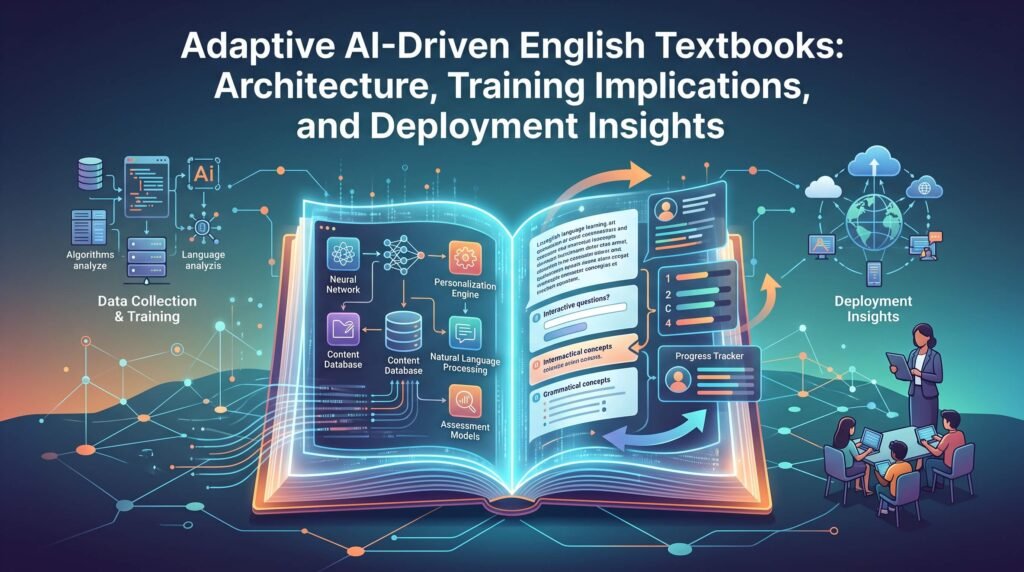
Executive Takeaway A five‑layer AI architecture for practical English textbooks—knowledge mapping, learner profiling, task generation, feedback orchestration, and teacher‑side governance—delivered a 12.5 % lift in unit‑completion accuracy (72.4 % → 84.9 %), a 10.8‑point gain on speaking assessments, and a 31.6 % reduction in teacher correction time across an 8‑week trial with 186 undergraduates. The system showcases how curriculum‑stable, […]